

Tell us about the importance of water quality.
In the world of speciality coffee, a lot of emphasis is placed on bean quality, origin, roast, grind and flavour profile – but arguably the main ingredient is water. The relationship is fundamental: if the water isn’t right, the coffee won’t taste great either.
From a quality perspective, the mineral balance of the water is vital to extract delicate flavours and aromas from the bean. Water that is too hard can produce a chalky-tasting coffee that is unpleasant and causes heavy limescale build-up in machines. These deposits are a silent killer. As little as just 1mm can increase energy consumption by 7% and lead to inconsistent brew temperatures, equipment breakdowns and costly engineer callouts.
It’s essential to choose the right filtration for your local water conditions. This ensures that the machine is protected, downtime is reduced and the coffee tastes as delicious as the roaster intended.
Water isn’t something generally considered important by operators – is that fair?
Historically, it is something of a ‘forgotten ingredient’. However, that is rapidly changing, particularly in speciality coffee. Top baristas and shops increasingly treat it as a crucial part of the brewing process.
From the machine side, manufacturers are also placing growing importance on filtration. Too often, water becomes a priority only when something goes wrong – a breakdown, limescale build-up, a complaint or an unexpected repair bill. The opportunity is to get ahead of it and treat water as an active part of quality, maintenance and cost control.
Who are your key partners?
Our world is very collaborative, and relationships are at the heart of everything we do. We work with all aspects of the industry – from independent roasters to national chains, vendors, restaurants and hotels, schools and universities, healthcare providers, equipment distributors and service engineering firms.
Our annual Grounds of Innovation Awards have introduced us to some of the UK’s most creative independent coffee shops that go above and beyond for customers and communities. We are looking forward to this year’s entrants.
Independents and high-street brands are very different. How do you approach both?
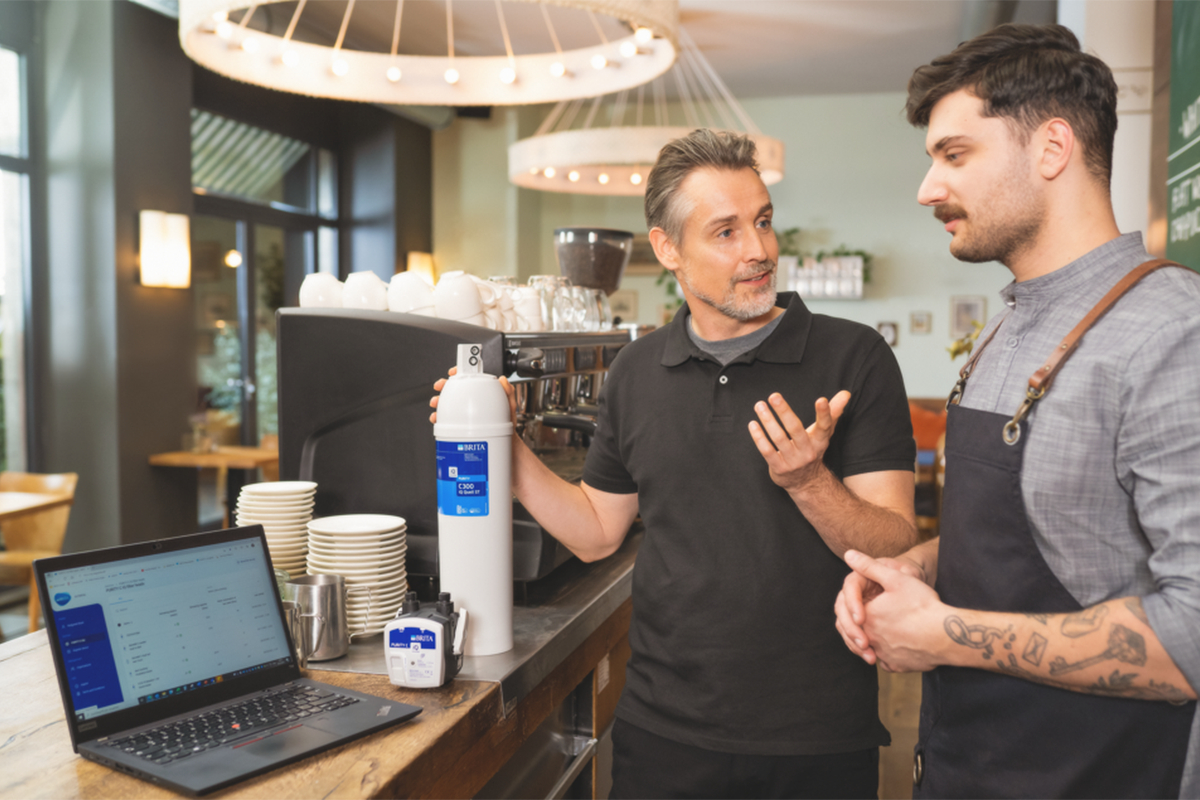
The goal is the same: quality and reliability. However, the delivery differs. With high-street brands and multi-site operators, the conversation is more about achieving consistency at scale. They need a ‘unified solution’ across dozens or hundreds of locations, often with different incoming water profiles – and are increasingly interested in smart, connected filtration that can be monitored centrally. Our iQ range allows them to see their entire estate from a single cloud-based portal.
For independents, decisions are often made by the owner or a small team, and it’s often about maximising every asset. They might not have the budget to replace their whole fleet with the latest smart bean-to-cup machines, which is why our iQ Meter is a game-changer. It is a retrofit solution that ‘smartens’ existing equipment, giving them big-brand data and protection.
What does the future hold for the machine sector?
We’re seeing three big trends. First, intelligence: smart filtration systems that flag issues, schedule maintenance and reduce downtime, using real-time data. Second, sustainability: energy efficiency, repairability and lifespan are becoming just as important as shot quality when operators choose equipment. Third, the need for operational efficiency and financial predictability. Planned filter changes are manageable and can be budgeted for as part of routine maintenance; however, reactive machine breakdowns result in unexpected costs, service disruption and reputational damage. T
As machines become more sophisticated, protecting them properly becomes even more important. Water treatment will play a bigger role – not just to prevent scale but to fine-tune flavour and reduce the need for chemical cleaning and intensive descaling.
Getting the water right is one of the simplest ways cafés can protect their biggest assets and improve the product they serve every day. The right filtration solution can significantly reduce breakdowns, support more consistent taste and give baristas a more reliable platform to work from, which in turn helps protect the reputation of the business.